ISO Over the Years: Anniversary Book Launch

“Hindi lang ito history book ng ISO, kundi kasaysayan ng buong social movements sa buong Pilipinas… Nandito ‘yung labor, nandito ‘yung farmers, mga urban poor, mga fisherfolks at iba pang mga communities.” 

This was part of the speech of Dr. Fabian Dayrit, ISO Board Chair, last November 15, 2024 at the launch of the ISO’s anniversary book, ISO Over the Years. The launch celebrated the rich legacy and the invaluable influence of ISO on the formation of organizations and movements throughout its 75 years of existence. This commemorative publication honors the foundations laid in social justice and development, reflecting ISO’s ongoing mission.

“Ito pong aklat na ito ay naglalaman, hindi lamang ng mga karanasan ng ISO as a social development institution, kundi ‘yung mga organisasyon at indibidwal po na sa ilang panahon ay naging kabahagi ng aming pagtugon sa tawag ng pagpapalaganap ng katarungang nakabatay sa pananampalataya.” – Dr. Liza L. Lim

ISO Executive Director Dr. Liza Lim welcomed the guests and provided an overview of the book, emphasizing its role as an inspirational resource. She highlighted the organization’s history and how the book captures the enduring impact of ISO’s work in promoting social justice in various sectors, from labor, the urban poor, farmers, and fishers. 

Dr. Mary Racelis also paid tribute to ISO’s founders, honoring their vision and dedication, which continue to inspire and guide the Institute’s efforts today.

The featured partner organizations—Federation of Free Workers (FFW), Federation of Free Farmers (FFF), San Dionisio Credit Cooperative (SDCC), Zone One Tondo Organization (ZOTO), Samahan ng Mangingisda ng Penitan (SMP), and Poro Sea Lovers Association (PSLA)—expressed their heartfelt gratitude for being included on the book. Each organization reflected on their partnership with ISO and the significant impact of their collective work in promoting social justice and community empowerment.

Students of the Department of Sociology and Anthropology of the Ateneo de Manila University also attended the event, sharing their experiences and how their training in sociology and anthropology equipped them to document the transformative stories of the organizations they worked with. 


Download a copy of the book here:  https://instisocialorderph.org/stories-and-publications/publications/

The ISO Journey: 77 years of empowering the marginalized

The Institute of Social Order marked its 77th founding anniversary last July 31.

Through the years the institution remained steadfast in its mission — to promote faith that does justice through the empowerment of the poor and marginalized sectors of Philippine Society.

This mission dates back to when the Institute of Social Order was founded by Fr. Walter Hogan SJ, and his former student and lay partner Mr. Juan Tan. Together, they mingled with the workers, met and befriended their leaders, attended union meetings, and interviewed employees. They aimed to grasp the challenges faced by workers and introduce Church social teachings into their struggles. They organized seminars and night classes for workers about union, social encyclicals, and public speaking (Fabros: 1988, p. 32). 

During the early years, the ISO continued its training and education programs for the labor and peasant sectors, as well as held special conferences and seminars for leaders of basic Christian communities and alternative social development institutions. Many of the forerunners of the NGO movement in the Philippines later on traced their initial exposure to social activism from the ISO. 

Post-EDSA, the ISO continued focusing on organizational development and professionalization in the effort to find its niche in social development.  This period of discernment resulted in the shift of program strategies towards integrated area development. For its target sector, the ISO decided to focus on the “poorest of the poor” at that period, namely the municipal fishers. The ISO likewise decided to go to the peripheries – communities receiving limited assistance both from the government, the church, and the non-government sector. 

Today, the ISO continues its work in community organizing and capacity building under its banner program, Social Transformation and Grassroot Empowerment or STAGE. STAGE is a multi-phased strategy for community-based natural resource management (CBNRM) that seeks to empower the marginalized fisherfolks through collaborative and participatory approaches. Carrying on the legacy of Fr. Walter Hogan, SJ and Mr. Juan Tan, the ISO and its partner lay organizations continue to protect the rights of the underprivileged and disadvantaged in the Philippines.

Building on these stories of leadership formation and organizational development, case studies of select organizations and movements that ISO formed and influenced throughout its 77 years of existence are featured in an Anniversary Book. These were formed based on the ideals and principles of our Jesuit founding father, Fr. Walter Hogan, S.J., and his student, Mr. Juan Tan. The book honors them and the other prime movers that have become part of our institutions.

*This is an excerpt from the article written by ISO’s Executive Director for the institution’s upcoming Anniversary Book. Stay tuned for its release.

**The accounts of the early history of the ISO are taken largely from Wilfredo Fabros, The Church and its Social Involvement in the Philippines, 1930-1972, Quezon City: Ateneo de Manila University Press, 1988. Fr. Fabros’ accounts are supplemented by lecture materials prepared by Fr. John J. Carroll, SJ entitled, Philippine Jesuit Social Apostolate, Chronology of Selected Events (1900-1990s), (Outline) as presented in the ISO Organizational Development Workshop last November 24, 1995, as well as with interviews with some of the former directors and staff of the ISO.

ISO in their 76th year: Thriving

Surviving the throes of the pandemic, the Institute of Social Order celebrated its 76th Anniversary, from July 28 to August 2, filled with reconnections and commemoration. The affair was not limited with the ISO staff as we also celebrated the anniversary with fellow Benigno Mayo Hall tenants, local and Jesuit partners, and the Ateneo community. With this, ISO seeks to reconnect and strengthen the bonds with its fellow development sector colleagues.

Last July 28, the ISO held a Sports Fest that showcased different Filipino games loved by all ages. The ISO was joined by its tenants during the sports fest. Teams were made of different people from the tenants and other organizations for them to bond and enjoy themselves together during the sports fest. Most of the time everyone was just looking at each other or just simply giving them a wave of greeting. There were almost no opportunities to interact with one another despite the closeness of their proximity. The sports fest allowed everyone to get to know one another thus strengthening their bonds.

The ISO also participated in the Ignatian fest that was held on July 30, as part of the SJSA. Visitors to the ISO booth was welcomed with plants grown from our urban garden. These were also available for purchase. The concept of the urban garden was rooted from the E-Punla project; where its goal was to uplift the Institute by generating additional income and at the same time promote taking care of the environment from the comfort of one’s home during the pandemic. To promote ISO’s thrust in raising community and the general public’s awareness on coastal resource management and realities of the fisheries sector, self-produced videos were also played on loop at the booth. Knowledge materials by ISO, supported by various grants and projects, were also displayed for reading. Booth visitors also received free notebooks and storybooks that promote climate change awareness and environmental conservation. This was to allow the Institute to engage with its Jesuit network and the youth; letting them know what the ISO does in its operations.

Finally on August 2, the ISO held a mass, presided by Fr. Gabriel Lamug-Nañawa, to celebrate their 76th anniversary. ISO’s tenants also joined in the mass as well. After the mass, the Research and Publications Division presented the 2020-2022 Institutional Report through a photo carousel (see below). The report showcased ISO’s accomplishments amidst the pandemic.

The unit also did a soft launching of the 75th ISO Photobook. It included multiple case studies on different organizations that were formed by the ISO in the past 75 years. Lastly, the Samahang Parangal was held to recognize the roles and achievements of individuals and units the previous year. . Throughout the celebration, some members of the Board of Trustees were also present. The ISO were joined by Fr. Fr. Primitivo Viray, SJ, Mr. Dennis Calvan and Dr. Fabian Dayrit. Fr. Viray and Dr. Dayrit each gave their speech to the employees of the ISO congratulating them in their 76th celebration as well as their perseverance during the pandemic.

ISO at the World Ocean Summit Asia-Pacific

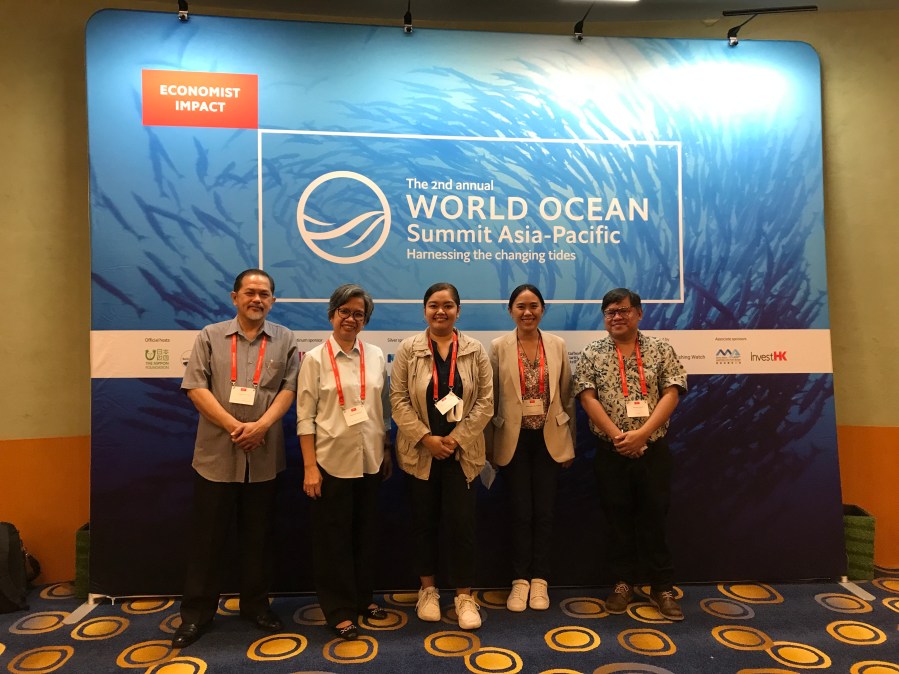
Select members of the Pangingisda Natin Gawing Tama (PaNaGaT) Network, including representatives from NGOs for Fisheries Reform (NFR), Institute of Social Order (ISO), and Rare Philippines attended the 2nd Annual World Oceans Summit Asia-Pacific held in Sentosa, Singapore on November 29-30, 2022.

5 people in front of a blue background
L-R: Mr. Ernie Lim and Ms. Marita Rodriguez (NFR), Ms. Kayla Castro and Ms. Samantha Poblete (ISO), and Mr. Dennis Calvan (Rare Philippines)

The event featured panel discussions on governance, climate change, finance, supply chains, innovation and technology, shipping, tourism, fishing, and aquaculture. Participants also had the chance to participate in side activities such as a roundtable discussion on ocean policy for Pacific Small Island Developing States (PSIDS) and workshops that tackled different issues around transparency in small-scale fisheries.

PaNaGaT representatives attended the three sessions of the Technology and Transparency for Small-Scale Fisheries Workshop, with a number of them presenting recently concluded studies and learning experiences from the ground. These workshop sessions tackled three major themes: data and innovation for fisheries management, data transparency, and the adoption and use of tracking technology. Through the support of Global Fishing Watch and Blue Ventures, Ms. Samantha Poblete (ISO Research Coordinator) presented the results of the recently conducted Technology Readiness Assessment rolled out in 34 coastal communities in the Philippines as part of the third session entitled, “Tracking Technology: Adoption and Use”. Led by the ISO, the main objectives of this study were to identify the communities that were able to meet the fisheries industry standards set aside by the law, and to determine the specific areas for assistance that may be needed by the communities to smoothly implement catch reporting and vessel monitoring.  Aside from presenting the results, Ms. Poblete highlighted the value of catch reporting and vessel monitoring, especially in improving fisheries regulation and safeguarding the rights of small-scale fishers to their aquatic resources. She also shared the existing challenges in rolling these out in the Philippine small-scale fisheries sector. Recommendations to encourage adoption and ensure sustainability were presented as well. Her presentation was one of the four case studies that were included in this session, along with presentations from The Nature Conservancy, Rare Indonesia, and National Taiwan Ocean University.

A woman speaking in front of an audience.
Ms. Samantha Poblete presents the preliminary results and insights from the Technology Readiness Assessment.

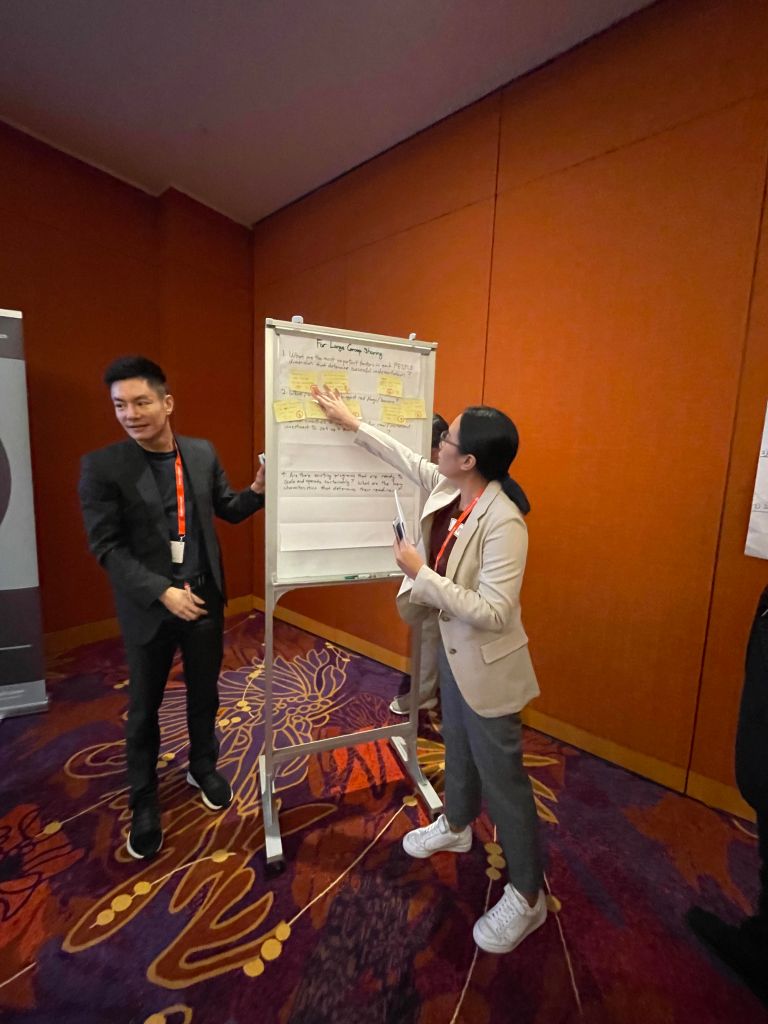
The session aimed to tackle the challenges that come with the development of and promotion to use different tracking technology for fisheries among countries in the Asia- Pacific. It also served as a venue to share the experiences and learnings of NGO practitioners and community partners in rolling out tracking technology systems in their home countries. The workshop activity for the session was a Political-Economic-Social-Technical-Legal-Environmental (PESTLE) Analysis to understand the various factors that contribute to the success and barriers in implementing tracking technologies for small-scale fisheries. The activity was also meant to help identify possible areas where vessel tracking programs may be initiated.

Consolidation of workshop outputs: drivers of success and barriers to implementing tracking technology on the ground

All workshop participants for Session 3: Tracking Technology – Adoption & Use

The Philippine case study gave insights on the factors that drive success and put barriers in implementing transparency mechanisms for fisheries in the country. Through the workshop, it was apparent that these wins and challenges are not unique to the Philippines but are also shared by other countries in the Asia-Pacific. The ISO, as part of the PaNaGaT Network, is looking forward to sharing the results of the study to a wider audience, and further refine the tool used to nuance the different conditions our partners and technology end-users, the fisherfolks, are subject to.

The Technology Readiness Assessment was part of the Responsive Policies for Small-Scale Fisherfolk towards Sustainable Industry Project funded by the Rosa Luxemburg Stiftung Southeast Asia, and the Strengthening Local Fisheries Governance for Fisheries Management Areas Project funded by the Philippine Department of Agriculture-Bureau of Fisheries and Aquatic Resources. The ISO acknowledges the partner NGOs that facilitated the data gathering – NGOs for Fisheries Reform (NFR), Pangingisda Natin Gawing Tama Network (PaNaGaT), Rare Philippines, Sentro Para sa Ikauunlad ng Katutubong Agham at Teknolohiya (SIKAT), Tambuyog Development Center (TDC), and WWF Philippines.

Training of Trainers on Fishery Industry Standards and Technologies

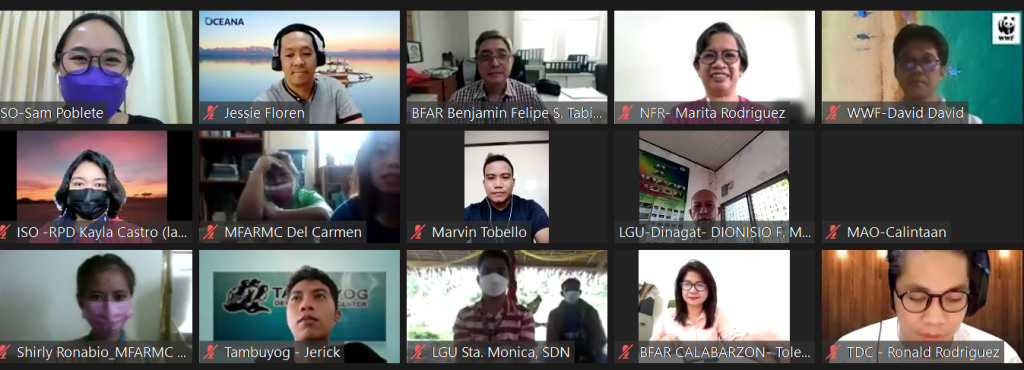
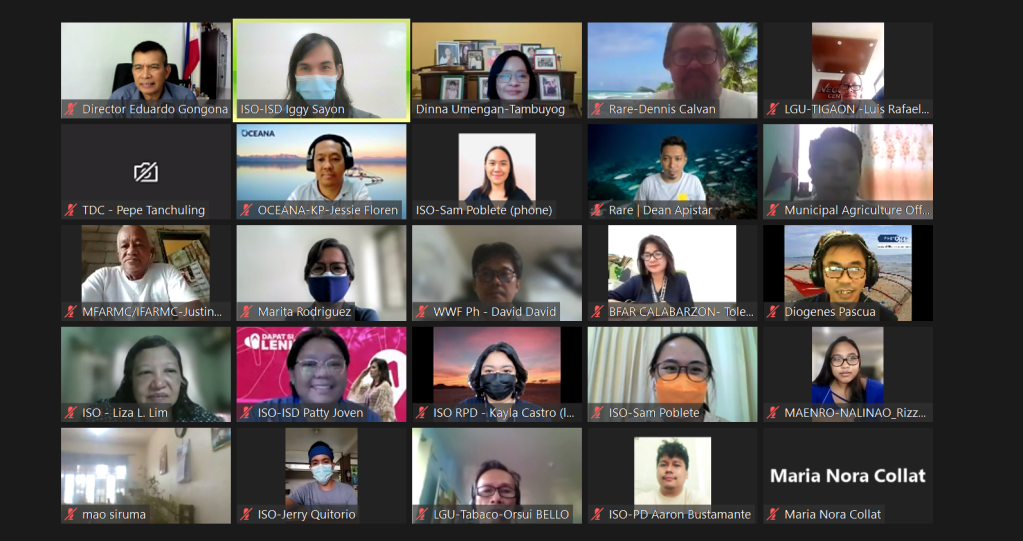
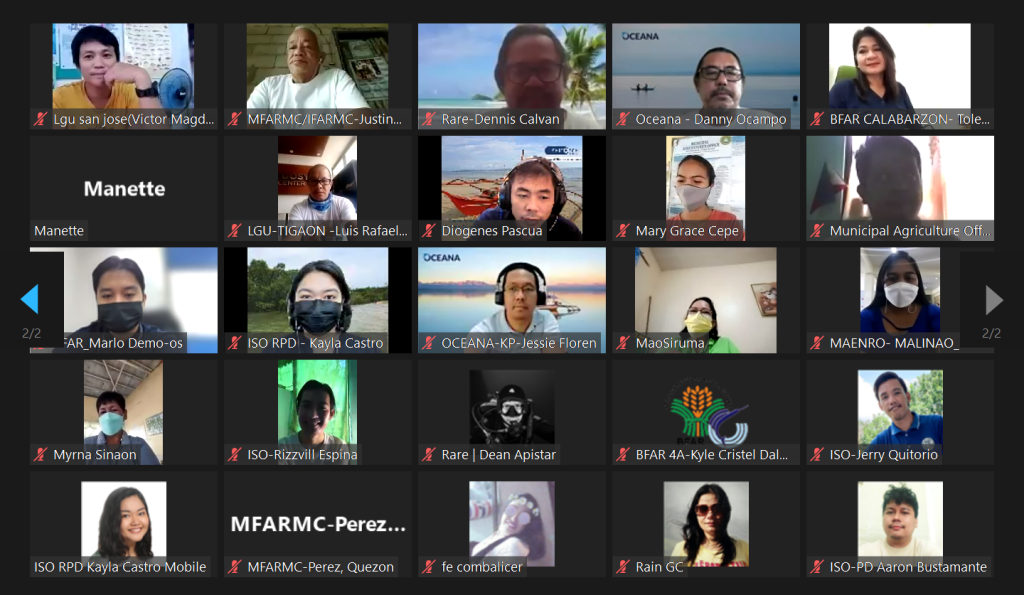
The Training of Trainers on Fishery Industry Standards conducted last October 21-22, 2021 via Zoom is anchored on the strategic objective of increasing the knowledge of small-scale fisherfolk on fishery industry standards.  Event organizers include the Institute of Social Order (ISO), NGOs for Fisheries Reform (NFR), Pangingisda Natin Gawing Tama (PaNaGaT) Network, Tambuyog Development Center (TDC), and Rare Philippines. The goal of the activity was to encourage small-scale fisherfolk and local government units to adopt appropriate technologies and comply to these standards as mandated by the Amended Philippine Fisheries Code.

The activity was part of the project titled, “Responsive Policies for Small-Scale Fisherfolk Towards Sustainable Industry” funded by the Rosa Luxemburg Stiftung (RLS).  A pool of experts and NGOs currently implementing technologies on electronic municipal catch documentation and traceability system (eMCDTS) and vessel monitoring mechanism (VMM) in the Philippines took part in developing the training design.

The training targeted 37 coastal municipalities that are part of the BFAR-PaNaGaT project on strengthening local fishery governance for Fisheries Management Areas (FMAs). This is to increase awareness beyond the partner communities of NGOs currently implementing the technologies. Participants hailed from coastal communities in Quezon, Camarines Sur, Albay, Catanduanes, Occidental Mindoro, Antique, Eastern Samar, and Surigao del Norte. These include key individuals among the fisherfolk, such as Municipal Fisheries and Aquatic Resources Management Council (MFARMC) members, and the LGUs, such as Municipal Agriculture Officers (MAOs) who can potentially conduct the basic orientation on fishery industry standards.

In the first two sessions, Atty. Benjamin Tabios, Jr., Head of the Office for Special Concerns of BFAR, discussed the legal bases of MCDTS and VMM. He oriented the trainees on the key points of the Amended Philippine Fisheries Code as well as the roles of the LGUs and benefits to the fisherfolk communities in implementing such technologies and standards.

The third session featured case presentations of technologies used for eMCDTS and VMM. Mr. David David, Fisheries Technical Officer, Sustainable Tuna Partnership Project of WWF-Philippines, shared about their experiences and how using eMCDTS contributed to governance improvement in yellowfin tuna fisheries. He also presented a comparison of various technologies and their capabilities.

Mr. Dean Apistar, Senior Manager for Data for Decision-Making of Rare Philippines, presented the OurFish app. The app allows digitization of records and assists fisherfolk in logging their fish catch. This helps fisherfolk present detailed fish catch information to fish buyers. So far, it is being used around Southeast Asia, Africa, and Latin America. The app was piloted in 27 municipalities in the Philippines in 2019.

Mr. Daniel Ocampo, Campaign Manager, and Mr. Jessie Floren of Karagatan Patrol, both from Oceana Philippines presented the last case for the training. They focused on using Visible Infrared Imaging Radiometer Suite (VIIRS) in addressing illegal fishing. Mr. Floren gave a brief introduction on VIIRS as well as an explanation on the usage of the technology. The technology assists the enforcers in mapping the territorial waters then presenting a route and fishing vessels present in the map.

For the fourth session, Mr. Dennis Calvan, Senior Manager for Government Engagement and Policy of Rare Philippines, gave an orientation on the draft Technology Readiness Assessment Tool. The purpose of this tool was to assess the the readiness and willingness of the fishers and LGUs to adopt these technologies in terms of policies, process, and management.

The program concluded with an open forum where participants actively engaged with the speakers. The participants were able to air reservations, clarify some concerns, and share their thoughts and experiences.

After the activity, the draft technology readiness assessment tool was circulated to the participants for comments. The feedback will serve as reference in refining the tool, in preparation for the possible conduct of the assessment in 2022. The training evaluation data will also be used as a guide in refining the training design and content. The re-echo of the training in the municipal level is also targeted next year.

Article written by: Jose Benigno D. Sayon, ISD Technical Assistant; Samantha Mae M. Poblete, RPD Coordinator; and Kayla Marie I. Castro, RPD Officer

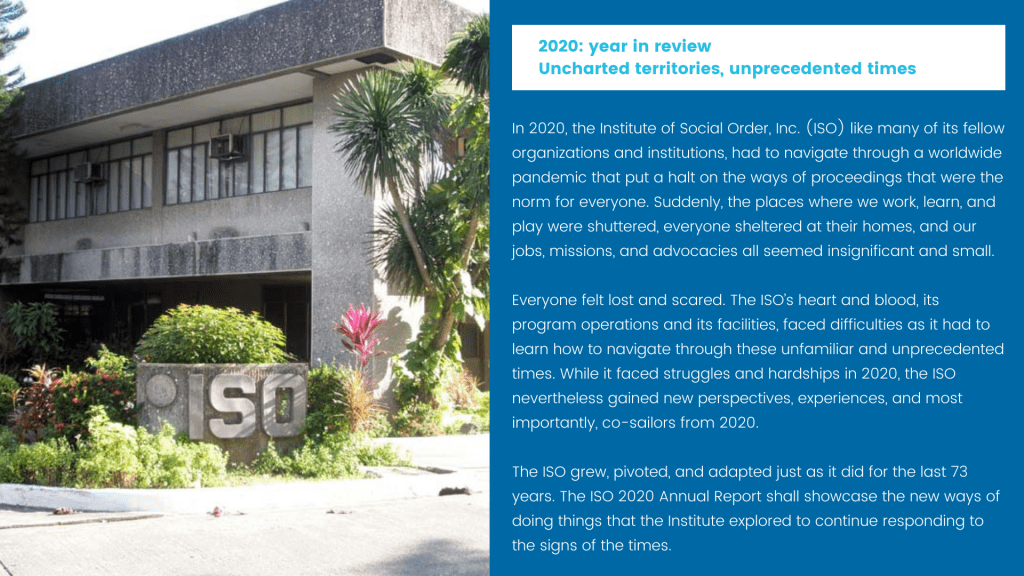
ISO in 2020: Navigating through the new normal

In 2020, the Institute of Social Order (ISO) started the year crafting the work plan for 2020-2022. Each unit started to implement plans in the first quarter of the year until COVID-19 hit the Philippines, mid-March.

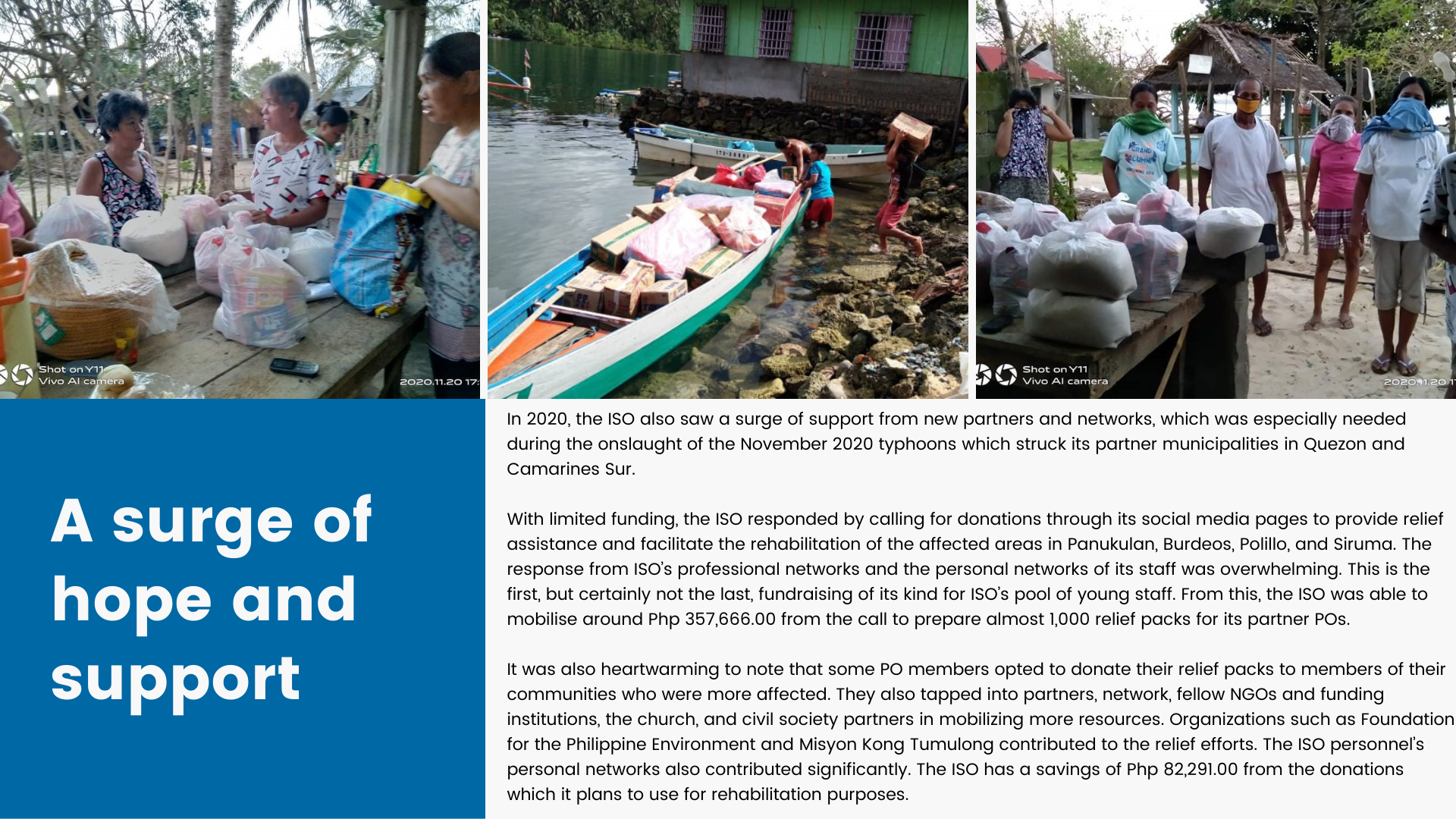
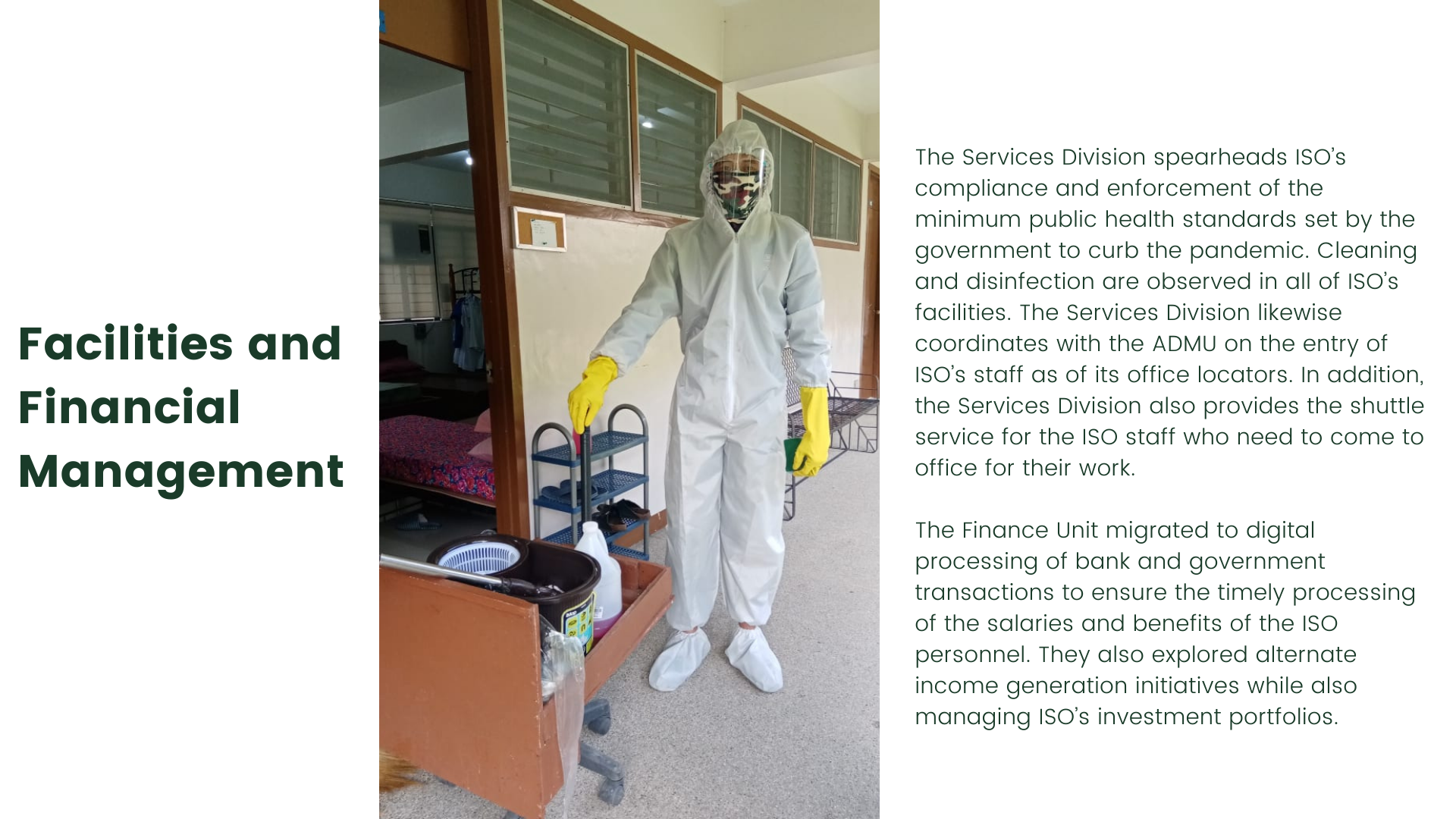
The pandemic forced many areas to undergo a strict lockdown putting a halt in the operations of the ISO in the office and on the field. A number of program officers were stranded in Manila, and faced difficulties coordinating project activities with partner People’s Organizations (POs). The staff had to adopt a work from home arrangement, which meant having to bear slow communication and information flow due to weak phone and internet signals.

The ISO was also unable to dodge the economic hit of the pandemic, and experienced a sharp decline in finances. The facilities and services which mostly depended on conferences and gatherings had to reduce its operations and the competition for grants continues to be tough.

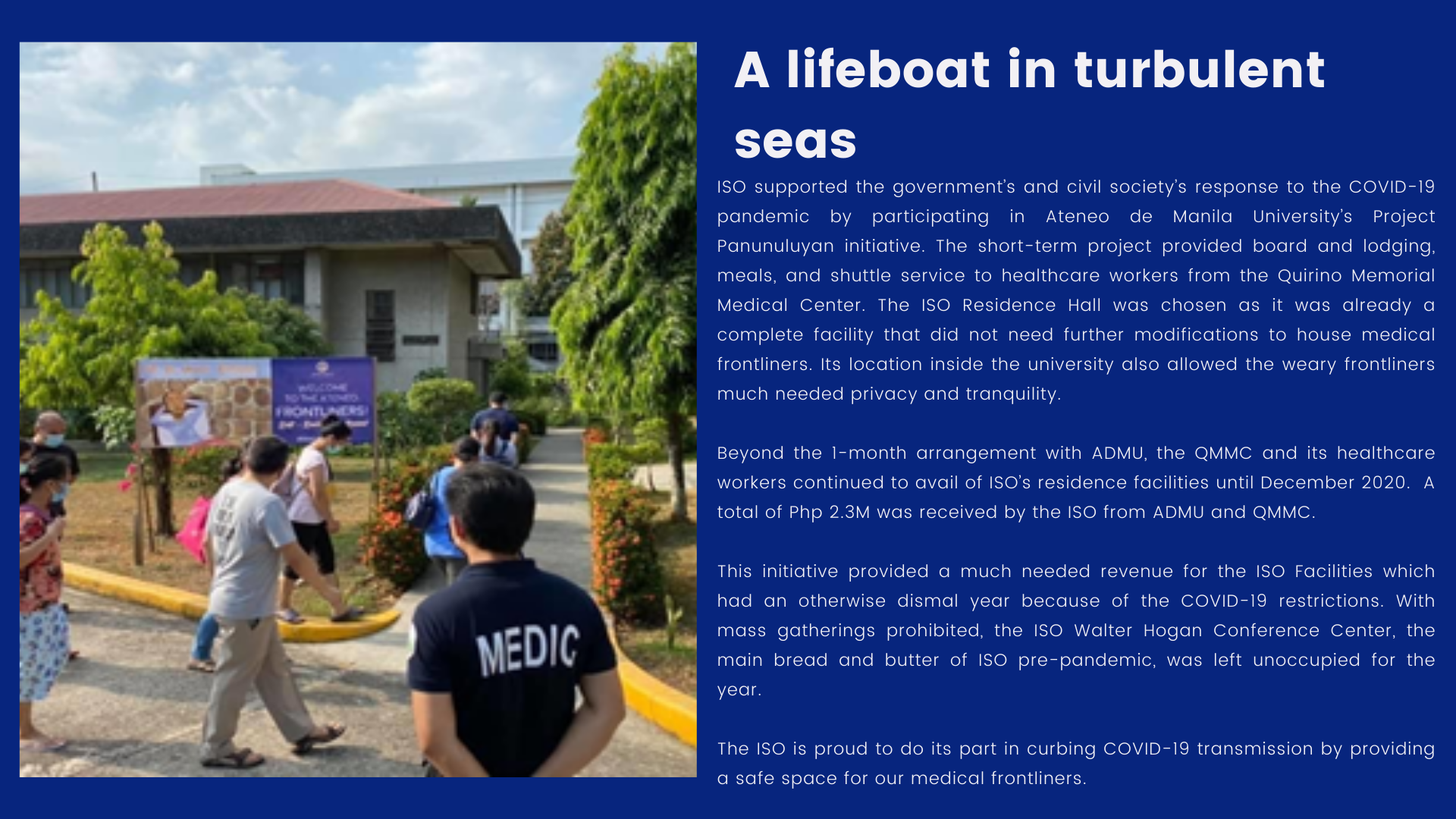
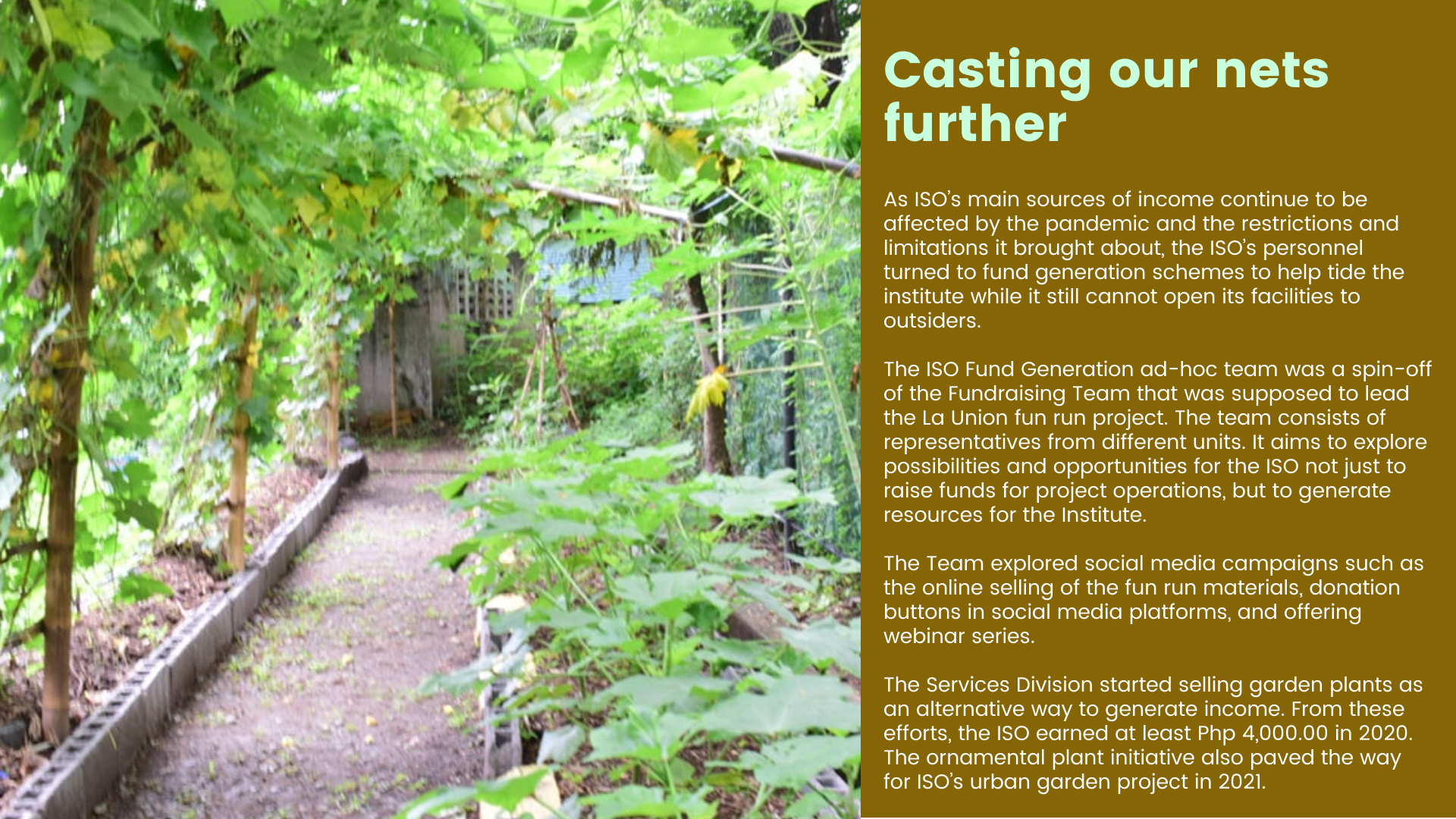
Despite these setbacks, the ISO took on the challenge of braving through the pandemic. The Services Division started to sell garden plants. The ISO offered health care workers a place to stay in the Residence Hall. The ISO started to ‘manualize’ the Institute’s STAGE strategies as a means to capacitate its partners even if the ISO’s presence in the area is limited. Moreover, the ISO is also exploring how to conduct capacity building activities for partners through online platforms.

The ISO continues to grow and adapt even during this difficult period so that they could continue their work of promoting faith that does justice.

Article written by: Jose Benigno D. Sayon, Technical Assistant

2020 ISO Annual Report prepared by: Jose Benigno D. Sayon, Technical Assistant and Anna Fatima N. Joven, ISD Coordinator

Values Formation for Marine Conservation and Protection in San Fernando City, La Union

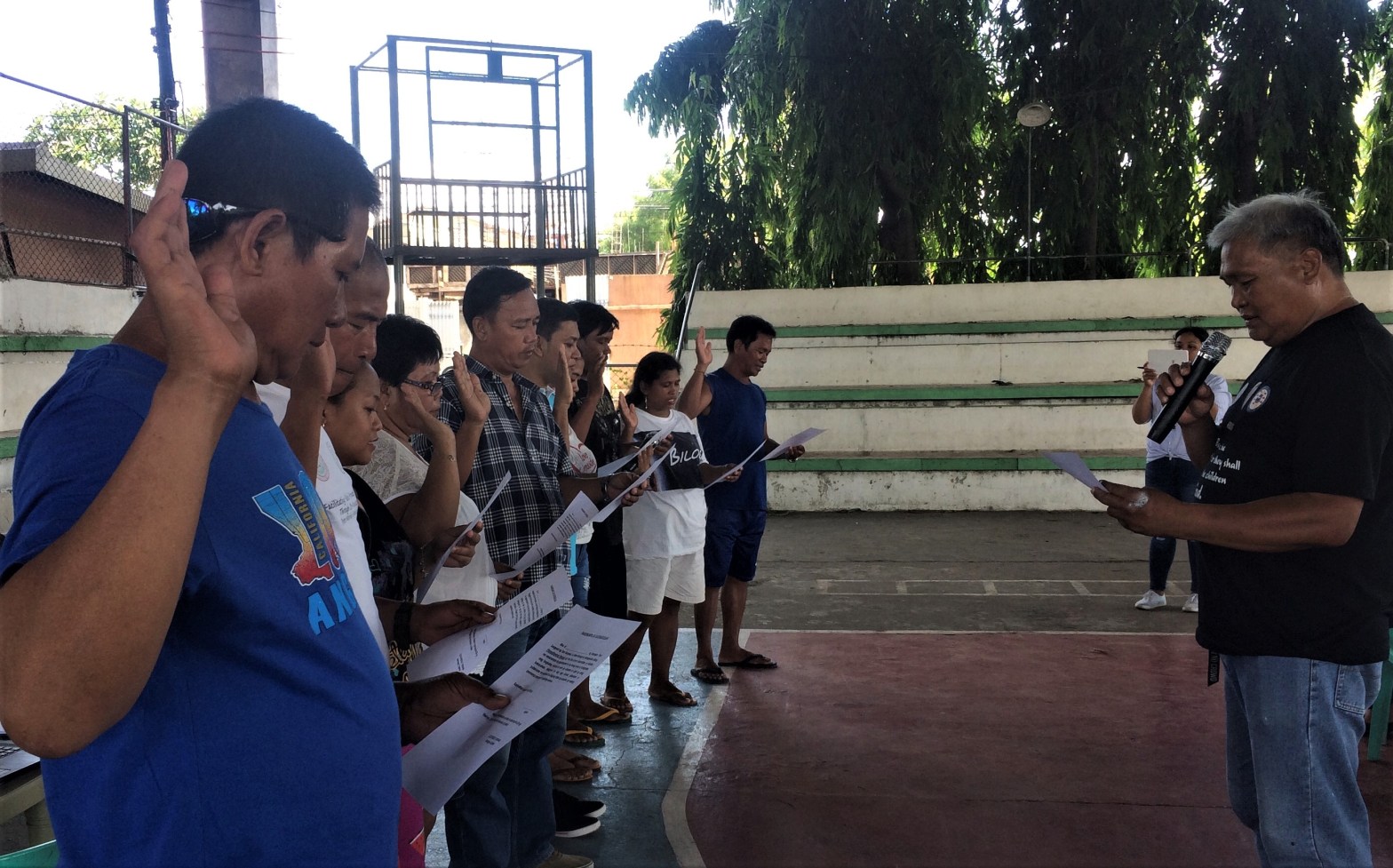
On May 27, 2021, Mr. Rizzvill Espina, Project Officer of the Institute of Social Order (ISO) facilitated the first Training of Trainers for its La Union project entitled, “Enhancing the Social and Economic Safety Nets of Fisherfolks in Culion, Palawan and City of San Fernando, La Union.”

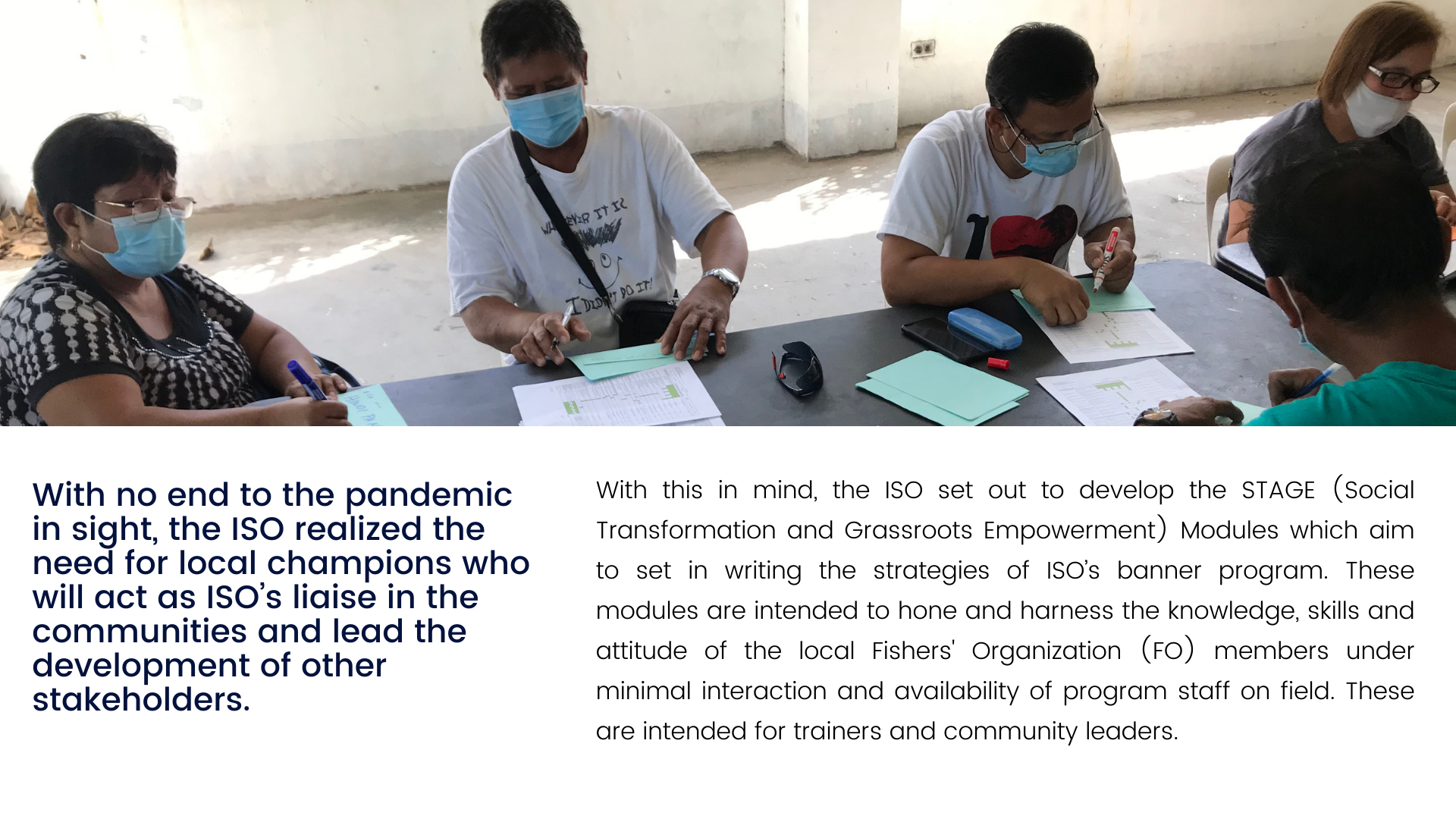
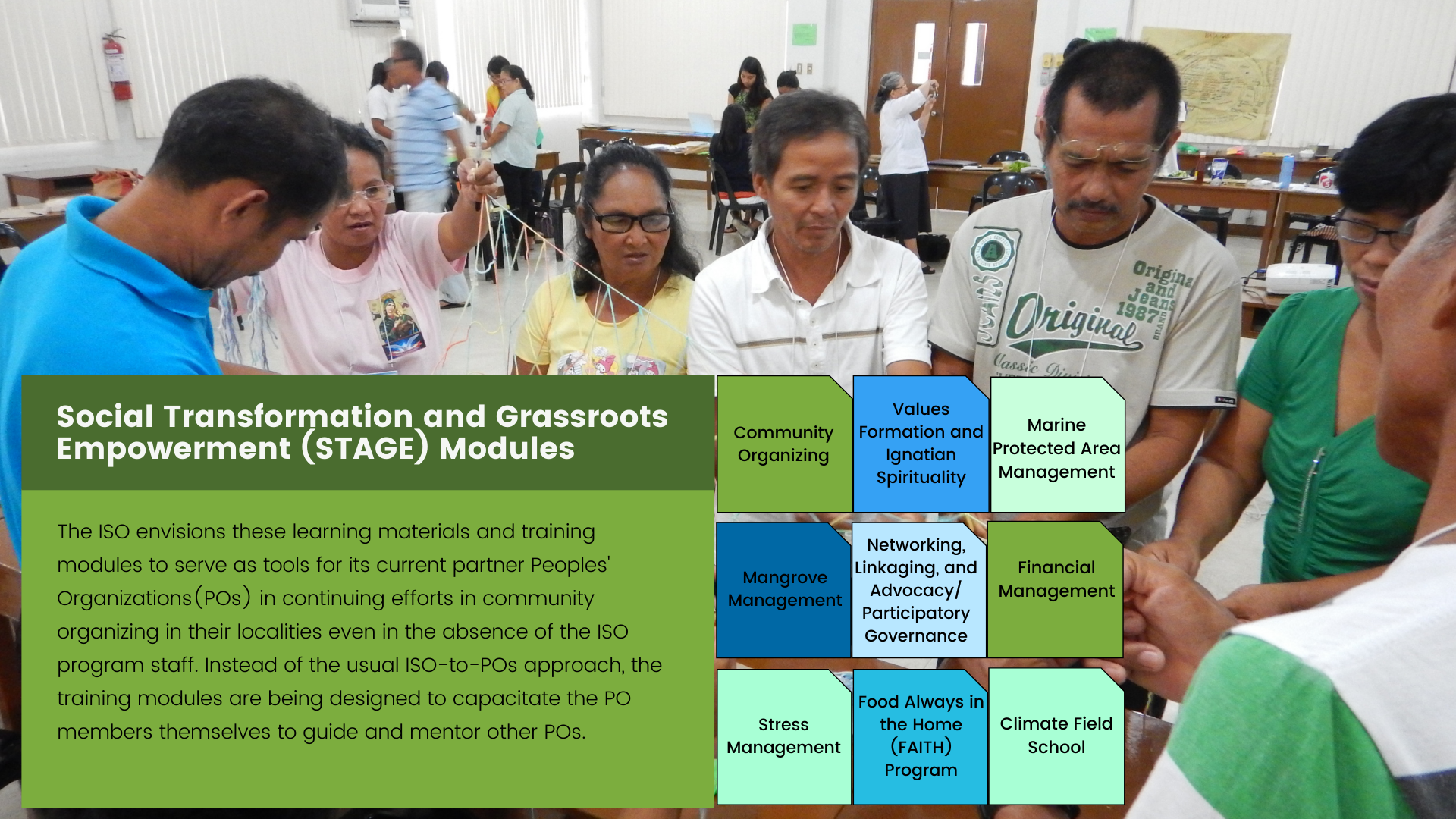
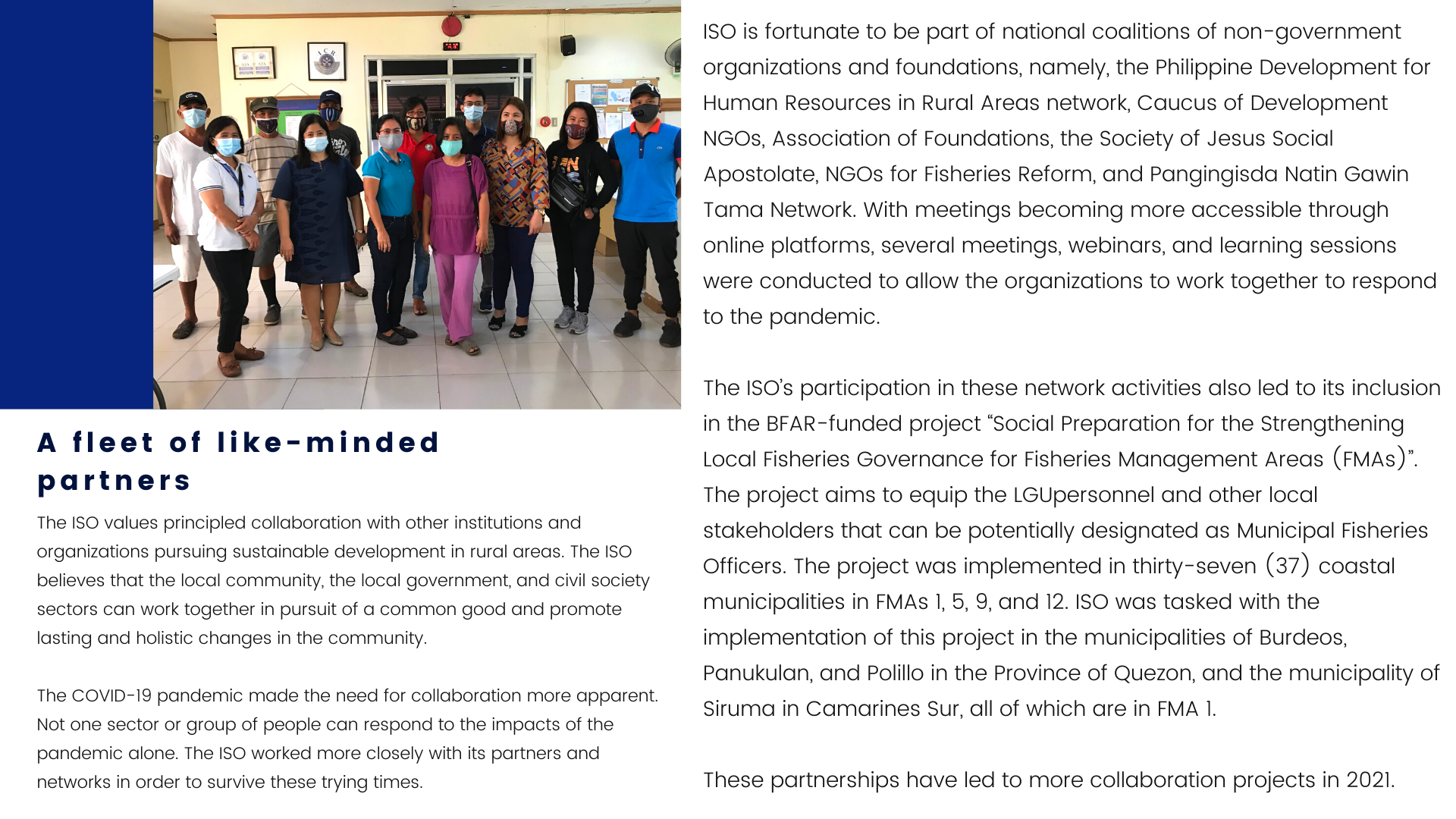
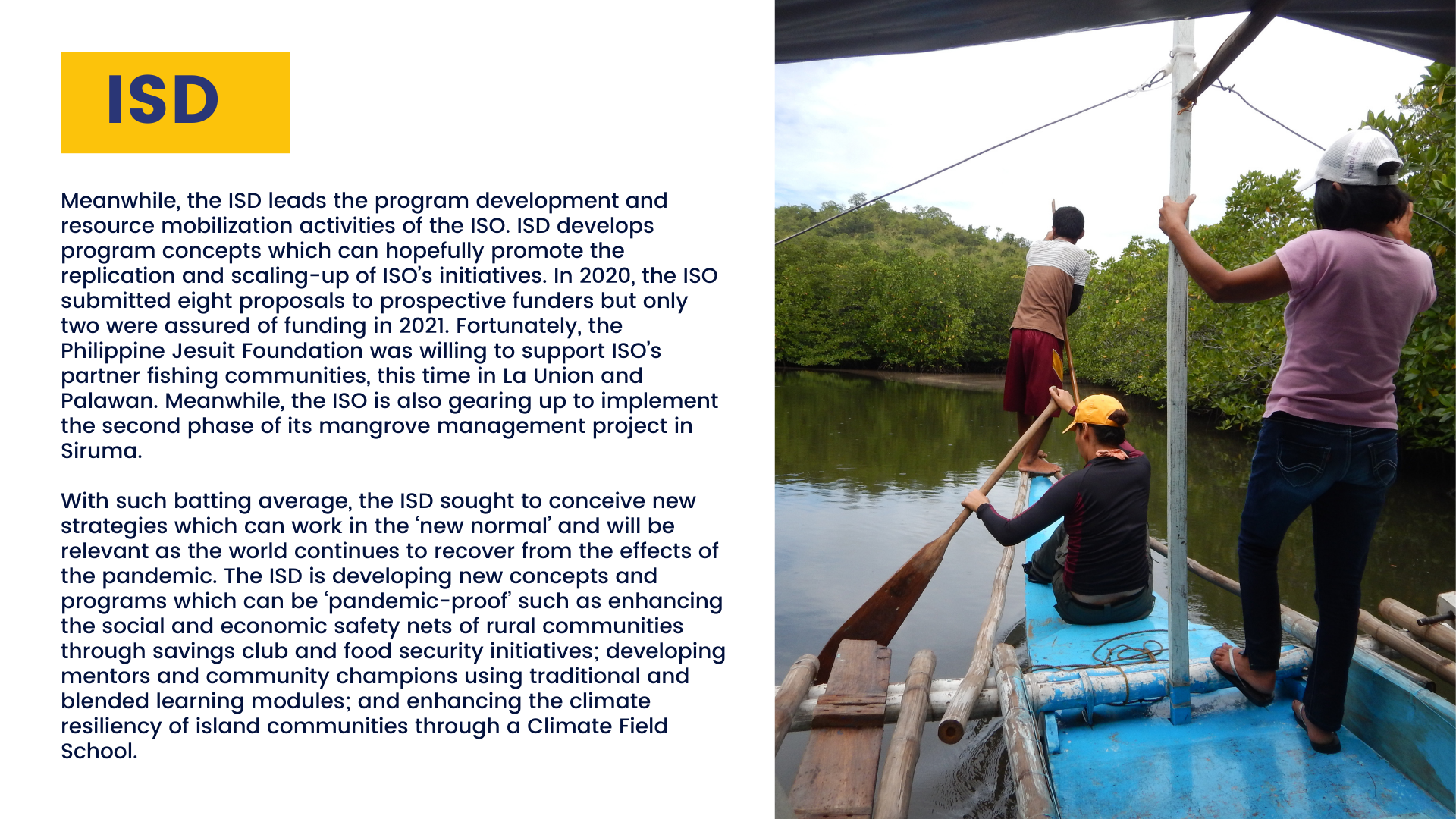
To date, ISO has been working with the three registered/accredited fisherfolk associations (FA) in San Fernando City in conserving and protecting their coastal and marine environment, namely: Kasay Sanktwaryo, Lingsat Marine Protected Area (Lingsat MPA), and Poro Marine Protected Area (Poro MPA) Management Council Inc. This year, ISO introduced the “Training of Trainers” as a strategy in forming leaders and champions from ISO’s partner peoples’ organizations. To do this, ISO developed training modules of its core strategies. This includes community organizing, values formation and capacity building, participatory action research, natural resources management, climate change adaptation and disaster risk reduction, participatory governance (networking and linkage), and livelihood development. The training modules are designed to capacitate FA members who will train and mentor their fellow members and other FAs.

The activity was conducted in the Lingsat MPA watchtower. Each FA selected three community facilitators/trainers who represented them in the activity. The Poro MPA was represented by its trusted Bantay Dagat members, while other FAs were represented by their selected officers.

In this first leg of the “Training of Trainers” series, the spotlight was on Values Formation. The discussion was linked to the Universal Apostolic Preferences of the Society of Jesus, particularly the call to collaborate in the care for our common home. This first Training of Trainers emphasized a community-based coastal resource management strategy that calls the community into conversion and assessment on how they live life, how they work, and how they relate to others. We get our inspiration from the person of Jesus Christ in his example of leadership as service.

The outcomes of the Values Formation Training of Trainers are as follows:

  • Capacitated the 9 community trainers to facilitate the same training during their monthly meetings;
  • Participants committed to resonate the knowledge gained during the training with other members and other people’s organizations; and
  • Helped values formation facilitators in guiding the fishermen to acquire and develop values that will empower them individually and take a more active role in environmental protection and community empowerment as leaders and members.

Though it was the first time to conduct this type of training in the project area, the activity went smooth and participants had fun. The activity was also supported by the City Environment and Natural Resources Office of the City Government of San Fernando.

Article written by: Rizzvill Espina, Project Officer for La Union

Nilo Abuyan: From Skepticism to Lifelong Partnership

“…The partnership that started sour became [one of] the most meaningful and longest ISO-LGU partnerships…”

This was how Emmeline Ceas, former ISO Associate Director recalls Petronilo Abuyan, or Sir Nilo to most people. He also gave the impression of being feisty and strict, as recalled by ISO Executive Director Dr. Liza Lim. One of their first encounters with Sir Nilo was the initial dialogues that that the ISO had set up between fisherfolk leaders and the Municipal Agriculturists of the municipalities of Northern Lamon Bay (NLB). At that time, the ISO was working on the formation of the Integrated Fisheries and Aquatic Resources Management Council of the area.  Mr. Abuyan was the Municipal Agriculturist of Mauban, Quezon and the President of the Association of Municipal Agricultural Officers (MAO) in Quezon. In that event, he shared his frustrations about the long years of pursuing a dialogue between the LGU and the fisherfolks in their locality. But he also took pride in the accomplishments of the Municipal Agricultural Office in Mauban on fisheries.

Despite the first impressions, Sir Nilo became one of the most inspiring and dedicated leaders that worked towards the sustainable management of fisheries in Northern Lamon Bay (NLB). In his time of working with the ISO, he has been a friend, a devoted champion, and a loving father.

He never said no to the request of the then Northern Lamon Bay Integrated Fisheries and Aquatic Resources Management Council to sponsor their baywide meetings, especially when they had to talk about fishery law enforcement and fishery and coastal resource assessments. He was also always proud of what the fishers’ organizations in their municipality had accomplished and would provide them incentives to do better.

In so many occasions, Sir Nilo has also acted as mediator among the members of the IFARMC when there are burning tensions which threaten to break the unity of the council. He often reminded them that their strength lies on their unity. He was instrumental in ensuring that Municipal Agriculturists and local government units rolled up their sleeves and worked together towards the sustainable use of marine resources and eradication of illegal fishing in the NLB. Nilo will be remembered as a man of good deeds, not only by the NGOs he has worked with, but also by the local community and law enforcement bodies.

Former ISO Program Manager Ging Faustino considers him, not only as a friend, but as a father. She will always remember him as a kind, generous, and loving person, not only to her but also to the whole ISO NLB Team. His passing made her recall his hearty laughter and the delicious food that he used to cook for them.

Indeed, Sir Nilo’s strong reservation towards NGOs that turned into lifelong friendship, partnership, and service to marine resource management has made its mark in the hearts of those who knew and have worked with him. You will always be remembered, Sir Nilo. Together with fellow fisheries champions, Mr. Rico Aumentado and Mrs. Linda Dacillo, who have also found peace with our creator, may you pray for us in our fight for grassroots empowerment and sustainable management of marine resources.

Maraming salamat po!

**This tribute post is derived from the compiled messages of Dr. Liza Lim, Ms. Emmeline Ceas, Ms. Ging Faustino, and Ms. Fe Combalicer.

Women-Led Mangrove Rehabilitation

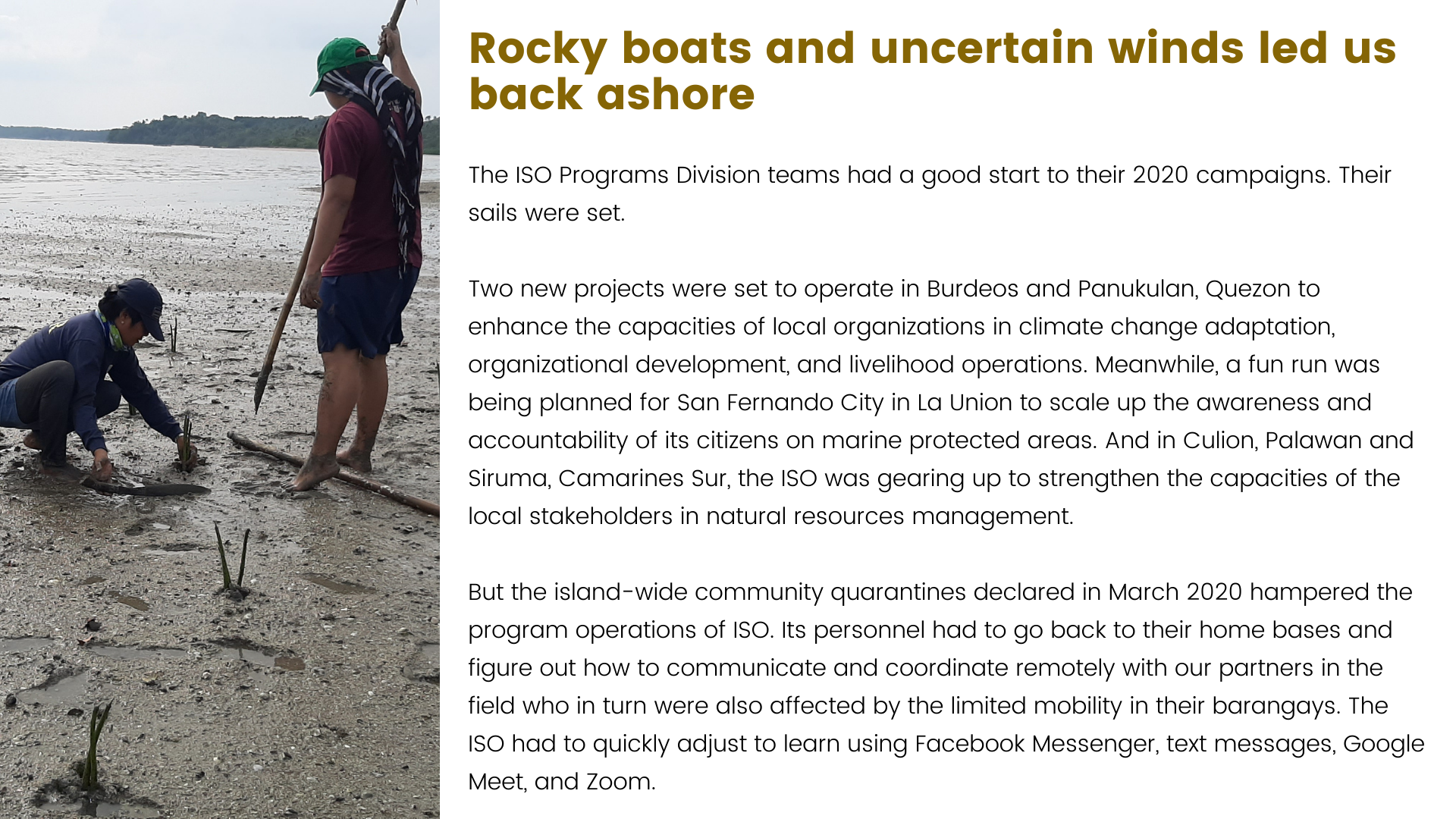
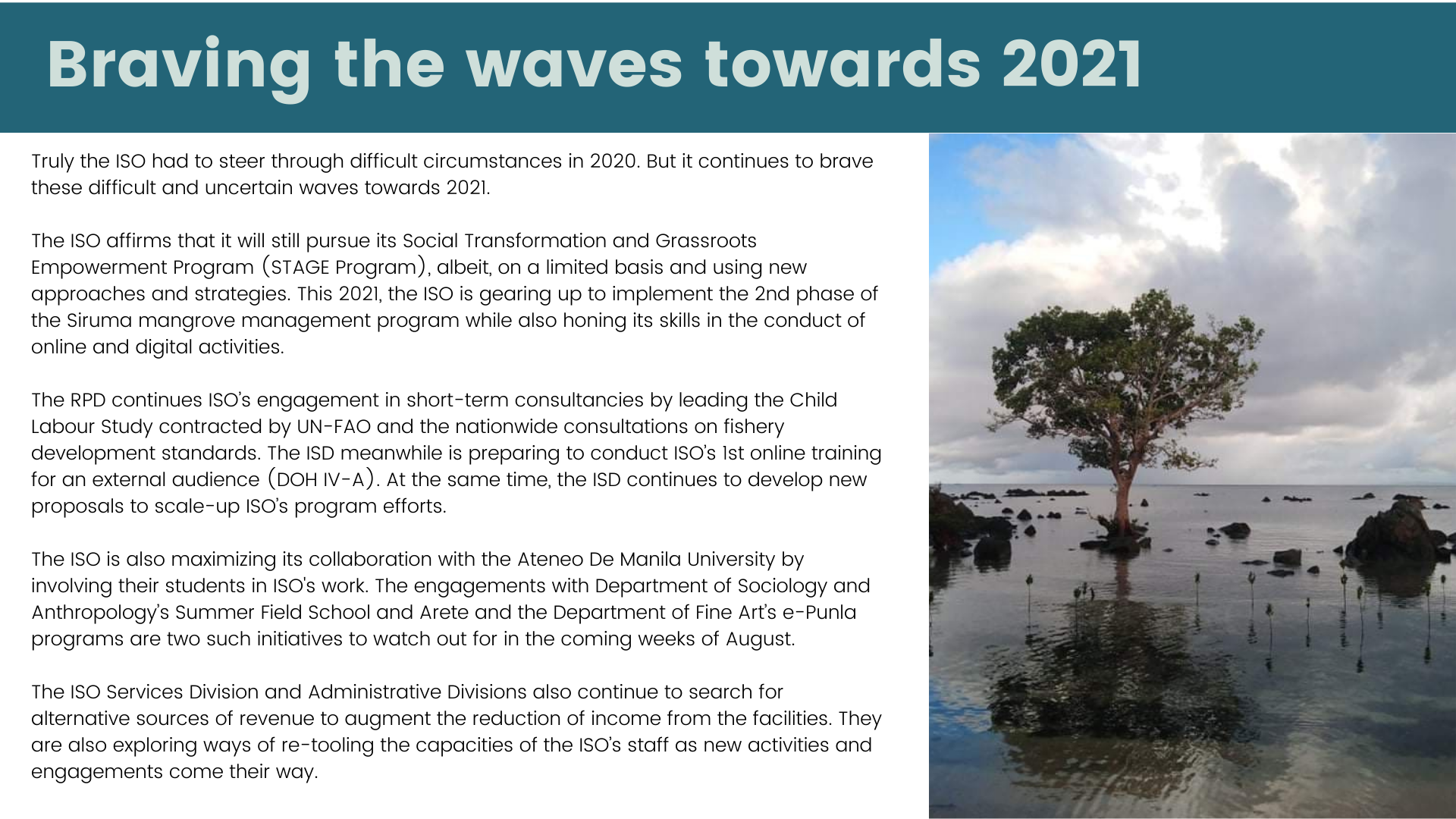
Siruma is a 4th class municipality located along San Miguel Bay in the province of Camarines Sur. As a coastal community, the residents of Siruma are largely dependent on marine and coastal resources for their livelihood. These natural resources also help them adapt to climate change. Therefore, the sustainability of these resources is crucial to their survival.

Nonetheless, there are various threats to these resources. Illegal and destructive fishing practices such as dynamite fishing and bottom trawling are rampant in San Miguel Bay. The cutting of mangroves and clearing of mangrove forests for fishpond development are prevalent in Siruma. Improper solid waste disposal is a major issue as well. If not addressed, these will result to the eventual decline of fishery resources in the municipality.

To help address these threats, the ISO entered Siruma in 2009 and facilitated the formation of fisherfolk organizations (FOs) in Siruma. These FOs were trained on community-based coastal resource management (CB-CRM) with a focus on the establishment and management of marine protected areas in Siruma and the operationalization of integrated coastal resources management in San Miguel Bay. Most of the members and leaders of these FOs are women.

One of the active leaders is Jinky Flores, 46, and a single mother to 3 children. Throughout the years, Jinky has been ISO’s ally in capacitating fisherfolk communities, especially women, on CB-CRM. Since 2011, she’s actively involved in the formulation of local fisheries policies and in enhancing the awareness of local stakeholders for the conservation of fishery resources as a member of the Municipal Fisheries and Aquatic Resources Management Council (MFARMC) of Siruma. Under her leadership, the Samahan ng Mangingisda ng Penitan was recognized by BFAR V in 2014 for their exemplary performance as the caretaker of the Penitan Bay Fish Sanctuary. From 2014 to 2018, she served as one of ISO’s local community organizers for the project entitled, ‘Facilitating Mangrove Management Initiatives in Siruma, Camarines Sur’ which was implemented through the funding support of the Forest Foundation Philippines (FFP, formerly PTFCF).

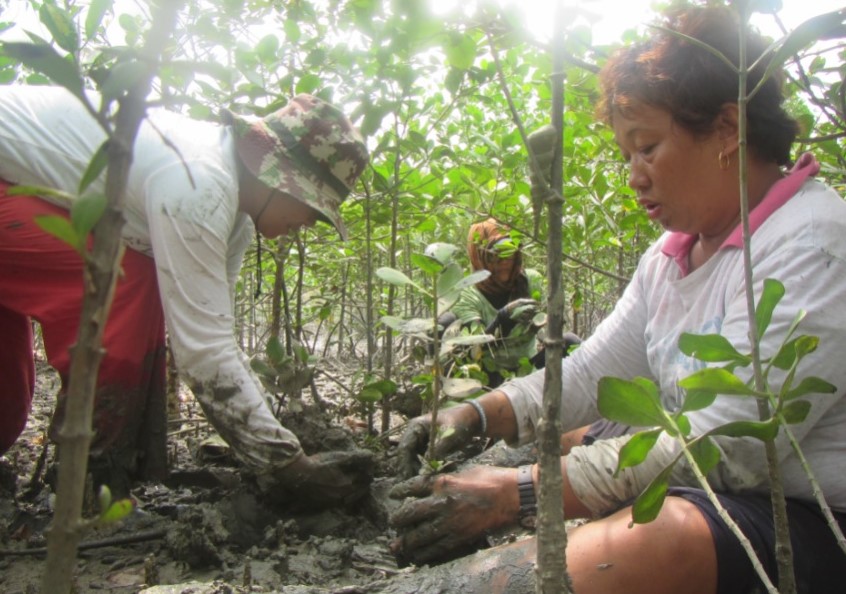
As a local community organizer, she assisted in the coordination of activities with networks and partner FOs; co-facilitated the organizational strengthening activities for the FOs and the MFARMC; and co-managed the mangrove rehabilitation and fishery law enforcement activities for the said project. Together with ISO, she trained 5 local FOs on coastal resource assessment and afterwards, facilitated their involvement in community-based mangrove rehabilitation, networking, and advocacy. This resulted in developing more champions for mangrove conservation in Siruma. At the end of 2018, they have reforested almost 100 hectares of denuded or depleted mangrove forests in the municipality.

On June 30, 2020, the Siruma Mangrove Area won 1st runner-up in the 1st Best Mangrove Award in the Bicol Region organized by DENR V. It was recognized as one of Bicol Region’s best managed mangrove conservation sites and considered as a best practice model for existing and future mangrove protection initiatives. This would not have been possible without the persistence of the women of Siruma, especially Jinky whose dedication to environmental protection is relentless.

As an FO leader and a barangay councilor who is now on her third term, Jinky continues her advocacy of poverty alleviation and protection of the remaining fishery resources and mangrove forests of Siruma.

Written by For. Jerry Quitorio, ISO Project Coordinator for Siruma

Battling Life’s Uncertainties through Compassion

The City of San Fernando in La Union is a booming metropolis of the North. Although uncertain, rural dwellers move to the City hoping for a better life. Arnel Cabradilla, 51, is a fisherman living in Barangay Poro in the City of San Fernando. Their family was originally from Bauang, La Union. But life was still difficult in the city – because of the lack of formal education, his father resorted to fishing to provide for their family’s daily needs. As a child, Arnel was dedicated to his studies hoping to have a brighter future. But due to poverty, he only finished first year of high school and had to start working for a living at the age of 17.

Now that he has his own family, fishing has been their primary source of livelihood. There are days when he is blessed with plenty of catches, but he goes home empty-handed on some days, often with a loss from fishing expenses. He usually resorted to 5-6 loans so that he can feed his family. This uncertainty brings anxiety to him and his family. This is the usual scenario for many of the fishers in the community.

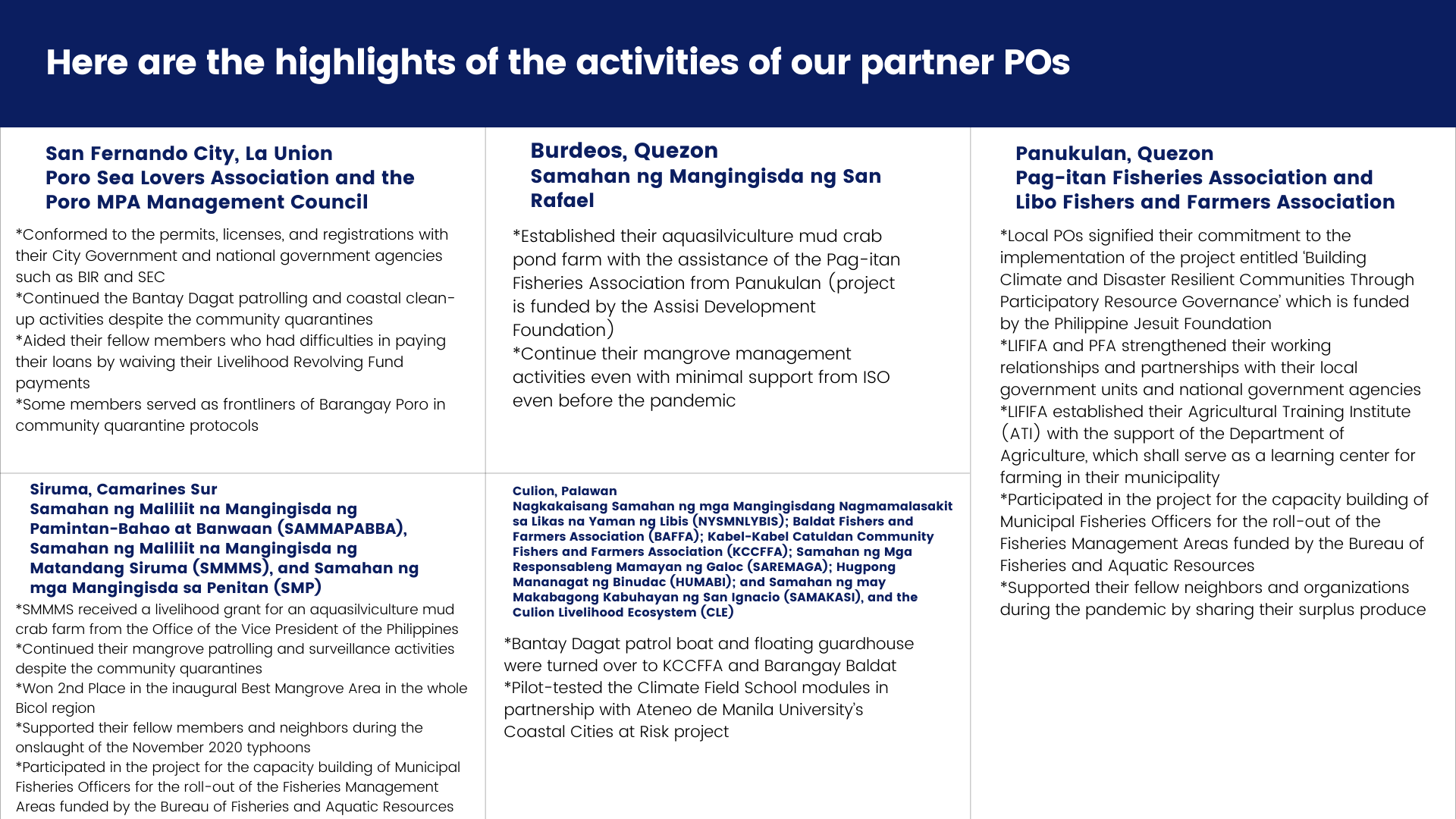
At present, Arnel no longer borrows from 5-6 loans which charge as high as 20% interest rate over an agreed period of time. As a member of the Poro Sea Lovers Association (PSLA), he has access to the organization’s micro-financing program. Through the program, the financially underserved members of PSLA can avail of loans with a minimal interest rate of 5% per month payable within one month. This makes it a more convenient option for fishers like Arnel. This is especially helpful in times of struggle such as the COVID-19 pandemic, which has brought about a lot of uncertainties in people’s lives. As the Vice President of PSLA, he felt the distress of his fellow members. Acting out of compassion, he initiated the waiving of penalties for late payment during the pandemic together with the other officers. He believes that the greatness of an organization is measured by the compassion of its members towards each other.

The greatness of a community can also be measured by the compassion of the residents towards the environment. As an organization, the PSLA envisions a disciplined, peaceful, and united community that protects the seas of Barangay Poro. Through collaboration with the public and private sectors, PSLA promotes sustainable fishing and environment-friendly livelihood activities not just in Barangay Poro, but also in other barangays of San Fernando City.

Arnel is also the Vice President of the Poro Marine Protected Area Management Council (PMMC) which has played a significant role in the improvement of the conditions of the Poro MPA. Its Bantay Dagat arm conducts regular patrolling, coastal clean-ups, and educational caravans even amidst the Community Quarantine. In this way, PMMC helps revitalize the fish stocks in the seas of Poro.

Through Arnel’s leadership, the PMMC and PSLA members are also extending their compassion towards the larger community through helping with the cleaning and clearing operations, packing and distribution of relief goods, and dissemination of relevant information to the communities affected by the community quarantine. Last June, the LGU acknowledged Arnel whose leadership and unrelenting service has influenced his fellow members to fight life’s uncertainties with compassion.

The PSLA and the PMMC were both formed by the ISO under the project entitled, ‘Facilitating Public-Private Partnership through Co-Management of a Marine Protected Area’, through the funding support of the Caltex Foundation, Inc. Both organizations are accredited by the City Government of San Fernando.

Written by Rizzvill Espina, ISO Project Assistant for La Union, and Elsie Bejar, ISO Project Coordinator for La Union