
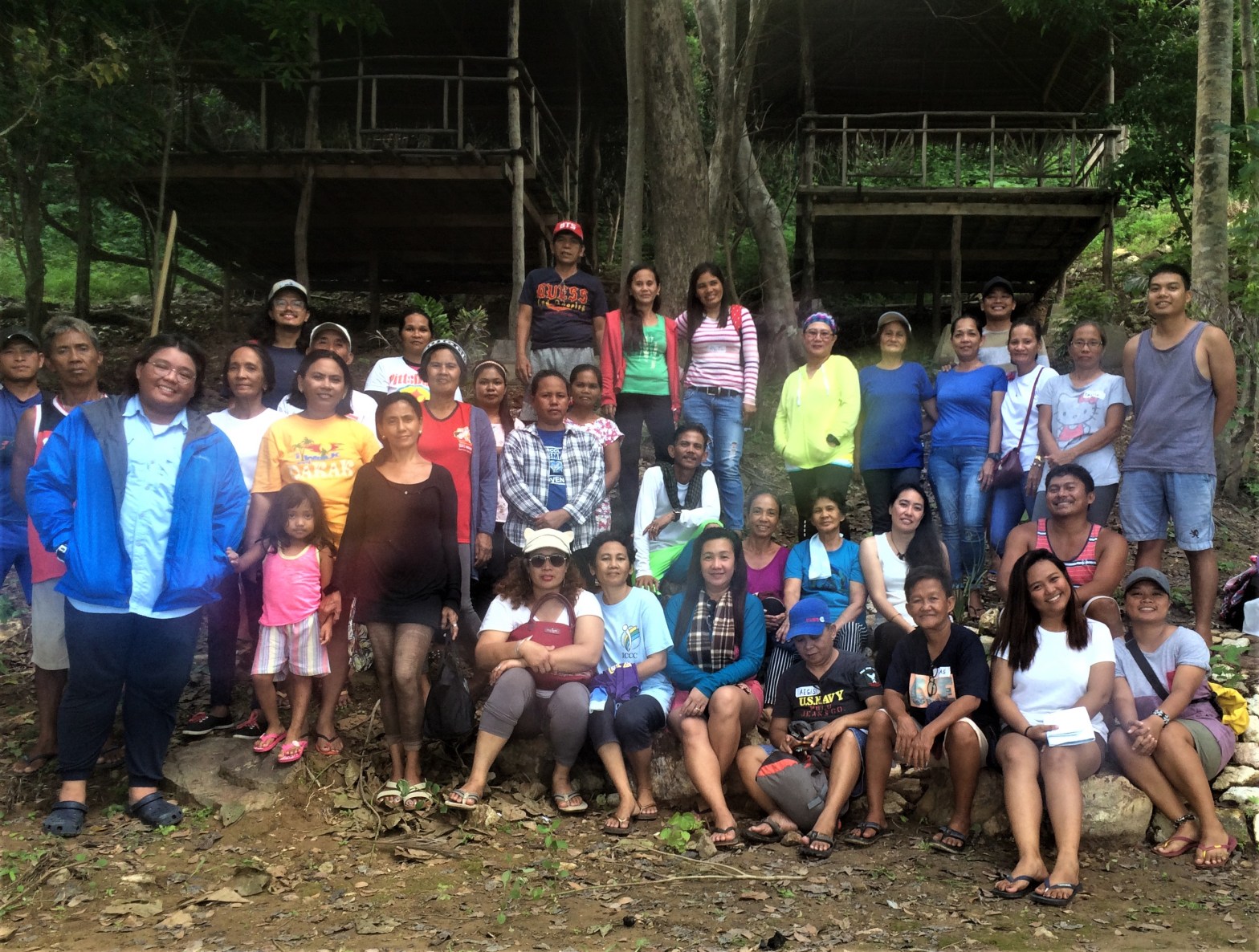
The Culion Livelihood Ecosystem

The Culion Livelihood Ecosystem (CLE) was formed by the Simbahang Lingkod ng Bayan (SLB) in 2014 to promote the economic cooperation among the Jesuit-based and SLB-organized associations in Culion such as the Loyola College of Culion (LCC), Isla Culion Credit Cooperative (ICCC), HUMABI, SAREMAGA, SAMAKASI, Hotel Maya, and Kawil Tours. The other people’s organizations (POs) supported by the ISO, namely KCCFFA, BAFFA, and NYSMNLYBIS became members of CLE in 2017. Comprised of different kinds of organizations ranging from an academic institution, POs, a credit cooperative, and private institutions who all have numerous business transactions, the CLE members wanted to establish control to the differing prices of commodities in the municipality.

As their name implies, CLE is an ecosystem wherein the individual members contribute to the growth of each other. The CLE members wanted to overcome the individualistic or ‘kanya-kanya’ mentality of the residents of Culion which is why they strove to establish this partnership. CLE members can be described as business partners, as they source their commodities and services from one another. If one institution needs something, they turn first to each other. For example, Hotel Maya procure ingredients for their menu from the ICCC and fresh seafood from the POs, while Kawil Tours lodge their guests at the hotel. The POs’ wholesale and retail stores also get their products from the cooperative. Meanwhile, the LCC contributes to the promotion of social entrepreneurship and tourism in Culion through their academic programme on entrepreneurial tourism.

The CLE as a whole and its individual member-organizations were key partners of the ISO in the implementation of the project entitled ‘Promoting Participatory Island Development Strategy in Culion, Palawan’. Supported by the United States Agency for International Development (USAID) through the Phil-Am Fund, the project’s main goal was to ensure the integrity of the biodiversity of the coastal and marine resources of Culion in the Calamianes Group of Islands through participatory governance.

Working for the economic development of their members and partners in the community, the CLE has been identified by ISO to provide the link between environmental conservation and livelihood development. They were present in the major activities of the said project, such as the Participatory Coastal Resources and Ecological Assessment (PCREA) data gathering, organizational development, mangrove reforestation activities, and the social enterprise component. During the preparations for the operations of the social enterprises, it was agreed by the stakeholders to set-up a Livelihood Revolving Fund (LRF) which shall serve as the sustainability mechanism of the enterprises. Instead of giving the livelihood capital as a grant to the POs, it shall be given to them as a soft loan which they must re-pay. The CLE was identified to manage this fund. As the POs also prepare for the operations of their social enterprises, the more business savvy members of the CLE are providing technical assistance to them.

Even after the said project, the CLE remains an ally of ISO in promoting sustainable economic development in Culion by ensuring that environmental conservation is at the heart of local business practices.

Written by Anna Fatima Joven, ISO ISD Coordinator
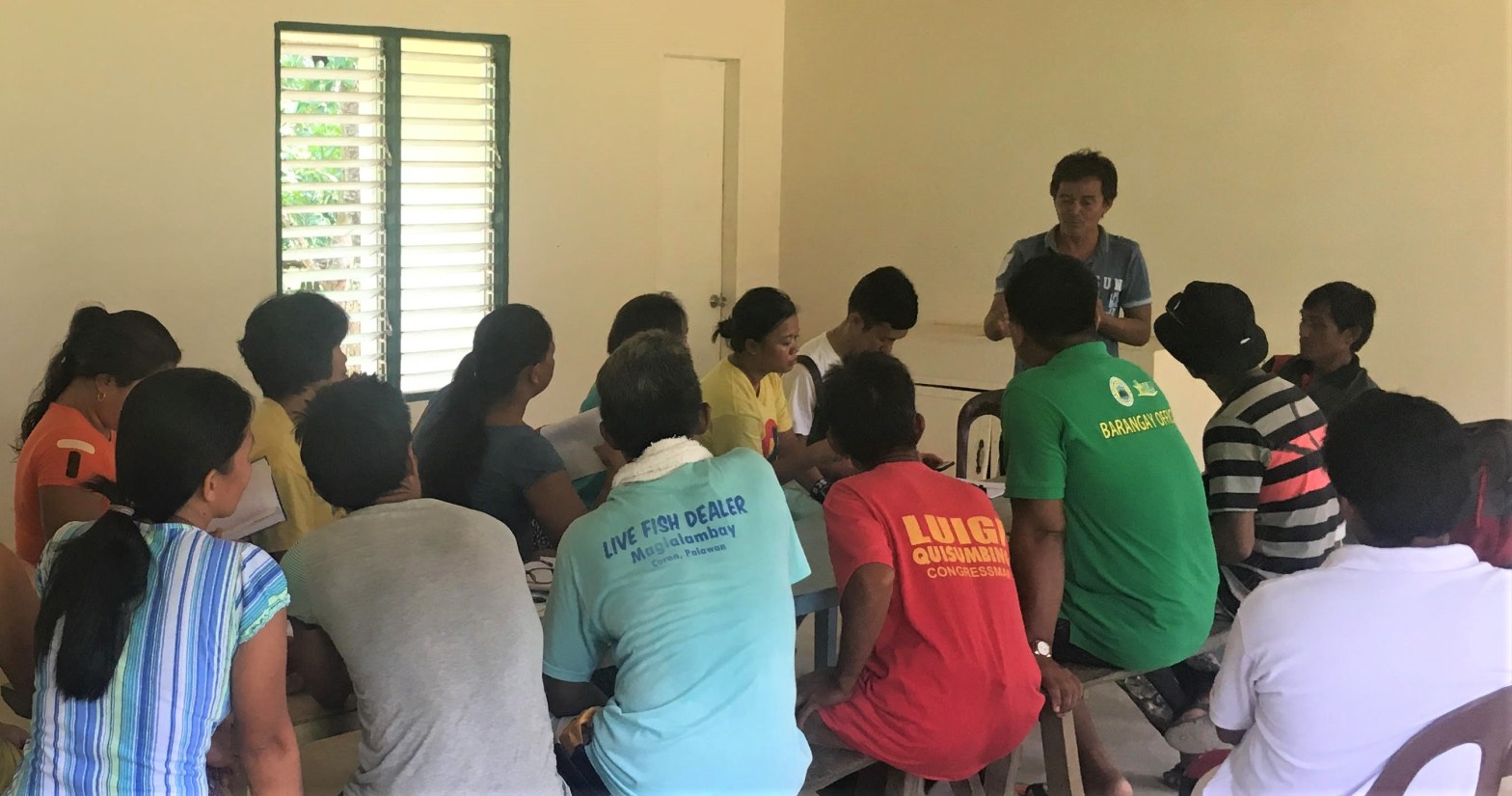
Fisher of Men and Women

In the Bible, Jesus called lowly fishermen to the ministry of sharing the gospel. While casting a net into the sea, Jesus told them to become fishers of men instead. It could have been a good venture to continue catching fish and earning for a living, but the story casts a wider vision. There is greater value on investing in men and women for others, and imbuing them with a broader sense of perspective so that they too will share in God’s mission.

Marte ‘Kutoy’ Davila, 64, is a fisherman by profession. He is also the president of the Libo Fishers and Farmers Association (LIFIFA), a registered fisherfolk association (FA) in the Municipality of Panukulan, Quezon. LIFIFA is one of the local fishers’ associations which the Institute of Social Order (ISO) assisted on its organizational development, capacity building, values formation, natural resource management (NRM), and disaster risk reduction-climate change adaptation (DRR-CCA). From being a project beneficiary organization, LIFIFA is now a partner of the ISO in its efforts to promote community-based coastal resources management.

Before, poverty pushed Marte to engage in illegal fishing activities. Compared to regular fish catch, illegal fishing promised larger catch and therefore easier influx of money. He engaged in it so that his family could eat at least once a day and to increase his regular catch as a small-scale fisher. When he became a member of LIFIFA, he learned about fishery laws and ISO’s community-based coastal resource management (CB-CRM) strategy. He realized that what he was doing was wrong and strived to learn more by consistently attending activities organized by the Institute.  He became an active member and eventually, became the president of the organization. As the president of LIFIFA at present, the former illegal fisher now teaches sustainable fishing and the protection of natural resources. He also now advocates/pushes for the rights of the fishers in their community.

In addition to this, Marte also assists the ISO in doing solid community organizing in Panukulan. According to him, his learnings from being involved in the ISO provided him the inspiration to share what he experienced and know with his fellow fishers. Under his leadership, LIFIFA has assisted in forming 3 fishers’ organizations, namely the Matangkap Association of Fishers (MatangkAF) from Brgy. Matangkap, Kalipunan ng mga Mangingisda ng Pandan (KMP) from Brgy. Pandan, and Bonbon Fishers and Farmers Association (BFFA) in Brgy. Bonbon, in Panukulan, all of which are now the expansion barangays of the ISO-PJF Project in Panukulan. He has also participated in dialogues with different national government agencies (NGAs) and civil society organizations (CSOs) to promote poverty alleviation for the fisherfolk sectors, and partnered with NGA projects for the rehabilitation of the environment of Panukulan.

These gave him the opportunity to visit the other ISO project areas to encourage his fellow fishers to organize themselves in protecting their coastal and marine resources. He has proven time and again that his educational background and social standing would not stop him from helping others and from protecting the environment. From being a simple fisherman, he became a “Fisher of Men and Women”, encouraging them to care for each other and to care and protect Mother Nature.

LIFIFA will once again be a partner of the ISO in the ISI-PJF project entitled “Building a Climate and Disaster Resilient Community in Panukulan, Quezon Through Participative Governance”. Under this project, using training modules that will be developed by the ISO, Marte will be able to further sharpen his organizing skills as mentor of other FAs. This is testament of how ISO, through its projects, encouraged someone like Marte to share to others what he has learned and influence them to become more responsible custodians and managers of the natural resources around them.

Written by Asher Earl John Gianan, ISO Project Assistant for Quezon, and Fe Combalicer, ISO Project Coordinator for Quezon and Culion

Community Leadership for Mangrove Conservation

Kagawad Leona Spad, a single parent to four kids, a community leader in Barangay Baldat, and president of the Baldat Fishers and Farmers Association (BAFFA), has been an inspiration to the community since ISO’s first project in Culion. She lives in Baldat which houses abundant mangroves converging into a green belt which protects its residents from inclement weather and disasters. Because of their barangay’s rich mangrove resources, the community, led by Kagawad Leona participated in the natural resources management project entitled ‘Participatory Island Development Strategy in Culion, Palawan’. The United States Agency for International Development (USAID), through the Philippine-American Fund, supported ISO by engaging the coastal community members and fisher folks in participatory research, planning, and coastal resources management. The project empowered the communities especially the fishers by involving them in coastal resources management activities like mangrove rehabilitation, establishment of Marine Protected Areas, establishment of conservation enterprises as alternative livelihood, and operationalization of Municipal Fisheries and Aquatic Resources Management Council (MFARMC).

Kagawad Leona was a part of the Local Research Team (LRT) which conducted the mangrove inventory of the Participatory Coastal Resources and Ecological Assessment (PCREA). By engaging the local community to conduct the participatory action research in Culion, the project aimed to increase their awareness, and consequently, their participation in resource governance in the municipality. The mangrove inventory also aimed to guide the establishment and maintenance of the mangrove nurseries, particularly for the stocking of site-appropriate seedlings. She led the BAFFA members in the establishment of their mangrove nursery and afterwards, in the stocking of site-appropriate seedlings, maintenance of the nursery, and outplanting activities. These activities involved grueling effort from the local community members. They would walk for hours under the blazing sun; they would stay all day in the mud soaking wet, bruised, tired and sometimes even scared, for they were not sure of what they would encounter in the dense mangrove forests. Leona, as their leader, never uttered any complaints. She can brighten the mood during mangrove outplanting activities with her unending smile and her nurturing nature towards the mangrove seedlings.

Because of her commitment and hard work in these mangrove conservation activities, she was chosen to coordinate these activities for their barangay, when the project had to double its efforts to meet the target indicators. She oversaw all the nursery and out-planting activities together with members of BAFFA. She also offered her unending support to the project by her constant presence and active participation in most of our invitations. Above all these, she never asked anything in return. In the end of it all, Kagawad Leona could walk with her head held high for she had done her part of saving these environments. She is no longer just a mother of four kids but a mother to nature for she had given birth to the constant hope of environmental protection.

Written by Sarah Butobara, ISO Project Assistant for Culion, and Anna Fatima Joven, ISO ISD Coordinator

A Life of Service in the Time of COVID

To many, living in the islands is synonymous to a slow-paced and simple lifestyle. For locals who live in the island for generations however, living in the islands can also be synonymous to poor access to social services. This becomes evident specifically in times of crisis such as a public health emergency caused by a deadly virus such as the SARS-CoV-2. For some people however, this serves as a motivation to dedicate their lives to be humans for others. One of them is Josephine ‘Josie’ Prudente, 54, a resident of Panukulan, Quezon, and a Local Community Organizer (LCO) of the Institute of Social Order (ISO) in Panukulan, Quezon. Josie, as we know her, originally hailed from the Bicol Region. She decided to move and settle in Panukulan when she got married to a local resident in 1984.

Josie initially got involved in ISO projects in 1997 as a member of the Local Research Team (LRT) which conducted a series of socio-economic studies and ecological resource assessments in the area. Currently, as an LCO, Josie helps in organizing fisherfolk associations in the municipality and helping them implement community-based coastal resource management, participatory research, and networking with other local stakeholders.

Josie is also a barangay health worker (BHW) assigned to monitor and evaluate children’s health in their barangay. She visits house-to-house to administer proper medication for children and provide information for mothers to help them in taking care of their children.

When the province of Quezon was put under the Enhanced Community Quarantine (ECQ) due to the COVID-19 pandemic, all inter-island public transportation, especially those going to and from the Polillio Group of Islands, were suspended. Movement of persons and products was limited, thereby affecting the livelihood of many fishers and farmers in particular. It was doubly challenging to live and work in a far-flung area like Panukulan where there is no hospital nor sufficiently-equipped medical institutions to treat the patients, especially for health workers like Josie.

As a barangay health worker, Josie became a member of the emergency team in Barangay Balungay, an entry point to the northern communities of Panukulan. During the early part of the COVID quarantine, she was among those who monitor the entry of people and check the health of fishermen. Despite the lack of protective gears, Josie and the other rural health workers continue to give their full support to prevent the further spread of the virus. It is heartening to know that there are no recorded and confirmed cases of COVID-19 in their area to date.

Despite her responsibilities as an emergency worker however, Josie continues to educate the locals about valuing the environment to achieve a healthy life away from various diseases, as she was trained by the ISO to do.

Josie will be the lead local community organizer who will be working with the ISO in the project funded by the Philippine Jesuit Foundation (PJF) in Panukulan, Quezon. Josie will not only be involved in the improvement of the health of children in her community, but will also educate the members of the community about disaster risk reduction and management. Children are vital resources of the community. However, they are also among the most vulnerable when disaster happens. Part of Josie’s work under the project will be the dissemination of new knowledge to parents in the community particularly on how to cope with risks and hazards and to ensure the welfare of children in times of natural disaster such as typhoons and epidemics.

Through the years and at the time of dire need, Josie has proved to be a dependable and competent community worker, apart from being a great wife and mother. In the spirit of mentorship and cooperation which the ISO aims to inculcate among its local partners, there is no doubt that Josie will be ISO’s asset in promoting sustainable development in the municipality of Panukulan.

Written by Asher Earl John Gianan, ISO Project Assistant for Quezon